
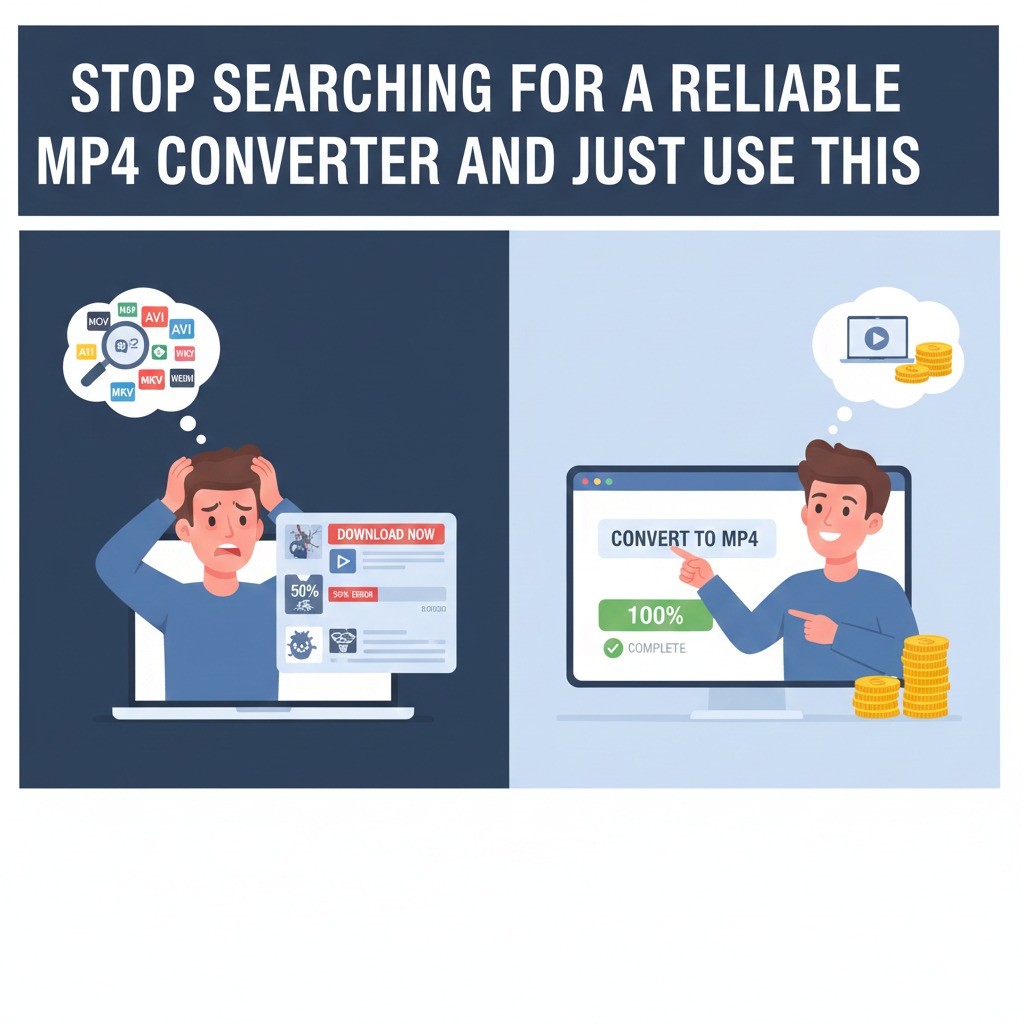
We have all been there at some point in our digital lives. You have the perfect video clip saved on your desktop and you are ready to share it with the world. Maybe it is a presentation for work or a funny moment with your family that you want to post on social media. You go to upload the file and suddenly everything stops. An error message pops up telling you that the file format is unsupported. Your heart sinks because you realize you now have to find a way to change that file into something the internet actually recognizes. This is the moment where the frustration begins. You go to a search engine and type in your request and you are immediately met with a wall of results that feel more like a trap than a solution. It is the modern struggle of file compatibility and it is a massive waste of your time. We live in an age where technology should be seamless but instead we are still fighting with file extensions that were designed decades ago. You just want a tool that does what it says without the drama or the technical headache.
The Digital Minefield of Online Video Tools
When you start looking for a way to fix your video you quickly realize that the internet is a minefield. You click on a link that looks promising but the website looks like it was designed by someone who hates users. There are flashing neon buttons everywhere that say download now in big bold letters. You know deep down that clicking any of those buttons is a mistake. Most of these free tools are just a front for something else. They want to install a toolbar in your browser or they want to track your movements across the web. It creates a specific kind of anxiety where you feel like you are one click away from breaking your computer. You just want to change a video format but instead you are performing a high stakes digital inspection of every pixel on your screen. It is exhausting and it makes the simple act of sharing a video feel like a chore.
The typical user experience is a cycle of hope and disappointment. You find a site that seems clean and you upload your file. You watch the progress bar crawl across the screen and you think you are finally making progress. Then the progress bar hits ninety nine percent and just stops. You refresh the page and try again but the same thing happens. Or even worse the site tells you that your file is too big for the free version after you have already spent ten minutes waiting for it to upload. This shared annoyance is something almost everyone has felt. It is the reason why so many of us have a browser history full of failed conversions and abandoned tabs. We are searching for reliability in a space that is filled with shortcuts and low quality software.
The Hidden Cost of Free Video Software
We often hear that if you are not paying for the product then you are the product. This is especially true in the world of video conversion. Most free tools are not actually free in the way we think they are. They use your time and your data as a form of payment. Some sites will throttle your download speeds to a crawl unless you buy a premium account. Others will pepper you with intrusive ads that make it impossible to see the actual interface. This bait and switch tactic is a staple of the industry and it is time we stopped putting up with it. You are giving these companies your content and your attention and in return they are giving you a headache.
The Great Watermark Betrayal
There is no digital insult quite like the watermark betrayal. You spend your lunch break converting a video for a project and you finally hit the download button. The file arrives and you open it with a sense of relief. But then you see it. Right in the middle of your beautiful footage is a massive translucent logo for the website you just used. It ruins the video and makes it unusable for anything professional. The site did not tell you this would happen until after the work was done. It is a dishonest way to do business and it is a massive waste of your bandwidth. This is why it is so important to find tools that are transparent about what they offer. You should not have to pay a ransom to get your own video back without a corporate stamp on it.
Paywalls and the Ten Minute Upload Trap
Another common tactic is the upload trap. A site will let you upload a massive file without any warning. You sit there and wait for the upload to finish which can take a long time depending on your connection. Once the file is processed the site reveals that you have to pay a monthly subscription fee just to get it back. It is a predatory practice that relies on the fact that you have already invested time into the process. They hope you will be so frustrated and tired that you will just enter your credit card information to get it over with. Do not fall for it. There are honest developers out there who provide great services without the hidden traps. You just have to know where to look.
Identifying a Tool That Actually Respects You
A good tool should feel like a ghost. It should be there when you need it and invisible when you do not. You should be able to arrive at the site and see exactly what you need to do within three seconds. There should be a clear area to drop your file and a simple menu to choose your output. This kind of minimalist interface is actually a sign of high quality engineering. It shows that the developers focused on the core function rather than trying to cram in as many ads as possible. When you find a tool that respects your eyes and your time you should hold onto it.
The Beauty of a Minimalist Interface
Simplicity is much harder to achieve than complexity. It takes a lot of work to strip away the clutter and leave only the essential features. When a site is clean it means the team behind it cares about the user experience. You do not need a twenty page manual to understand how to change a video format. You need a big box that says drop file here and a button that says convert. That is it. A simple design also usually means the site will load faster on your phone or your laptop which is a huge plus when you are on the go.
Privacy and the Security of Your Local Files
We live in an age where data privacy is more important than ever. When you upload a video to a random site you are essentially handing over a piece of your personal life. It might be a video of your kids or a sensitive work document. You need to know that the servers handling that file are secure. The best tools have a clear policy that states they delete your files immediately after the conversion is finished. They should not be storing your data forever on some random server in another country. Always look for a mention of privacy or security before you hit the upload button. It is a small step that can save you a lot of trouble down the line.
Mastering the Workflow of Modern Video
The way we handle video has changed so much in the last few years. We are no longer just dealing with files from a single camera. We have screen recordings from our laptops and vertical clips from our phones and high definition footage from drones. Every single one of these devices seems to have its own favorite way of saving data. This creates a mess of formats that do not always play nice with each other. You might have an MOV file from your iPhone that your Windows computer refuses to play. Or you might have a heavy MKV file that is too large to send over an email. This is where a universal format becomes your best friend.
Handling Files from Different Sources
The goal of any good workflow is to get everything into a format that works everywhere. You want to be able to send a file to your boss and your grandmother and be certain that both of them can open it. This is why most professionals try to standardize their libraries as much as possible. It saves you from having to troubleshoot playback issues right before a big meeting. Managing these different sources requires a tool that can speak every digital language. It should be able to take a weird file from a dashcam and turn it into something your editing software actually understands.
Using an MP4 Converter for Maximum Compatibility
When in doubt you should always aim for the MP4 format. It has become the universal language of the web for a reason. Almost every device on the planet can play it without needing extra plugins or special software. Whether you are using a smart television or an old tablet or a brand new smartphone the MP4 will just work. This is why having a reliable MP4 converter in your bookmarks is so important. It allows you to take all that messy footage from different sources and flatten it down into a single reliable format. It is the smartest move you can make for social media or professional presentations. It ensures that your audience sees exactly what you intended them to see without any technical glitches.
Technical Details That Actually Matter to Humans
You do not need to be a video engineer to get good results. However there are a few practical things that every person should understand in 2026. This includes how we interact with technology in our homes. Just as we use an MP4 converter to handle our media we are also finding better ways to help our families engage with digital content. For example many parents are turning to platforms like sparx reader to help their children build strong literacy habits through a screen rather than just scrolling through mindless content. Understanding these details will help you get the best quality without creating files that are so large they break your email. It is all about finding the right balance for your specific needs.
Resolution Versus File Size
Everyone wants their videos to look crisp and clear. We are used to high definition screens and we notice when a video looks blurry or pixelated. But high resolution comes at a cost. A four thousand pixel video is beautiful but it is also massive. If you are just sending a quick update to a coworker you probably do not need that much detail. A standard ten eighty resolution is usually the sweet spot for most things. It looks great on a laptop screen but the file size is manageable. A good converter will give you the option to choose your resolution so you can fit the file to the task.
Frame Rates and the Smoothness Factor
Have you ever converted a video and noticed that it looks a bit choppy afterward? This usually happens because the frame rate was changed during the process. Most videos are shot at twenty four or thirty frames per second. If your tool tries to force it into a different number the motion will look unnatural. The best way to avoid this is to look for a setting that says keep original or match source. This ensures that the smooth motion of your original footage stays exactly the same in the new file. It is a small detail but it makes a huge difference in how professional your final video looks.
Final Thoughts on Reclaiming Your Digital Time
Technology should serve you and it should never feel like a burden. If you are spending hours every week fighting with file formats then something is wrong. You deserve tools that are honest and fast and respectful of your privacy. Stop settling for the junk sites that fill your screen with ads and ruin your videos with watermarks. Life is too short to spend it staring at a broken progress bar on a shady website. Find a tool that works and stick with it. The goal is to get back to the work that actually matters to you. Whether you are creating art or building a business your tools should be the wind at your back rather than a wall in your way. Take control of your digital workflow and stop searching for the basics. Once you have a reliable system in place you can finally focus on the fun part of creating and sharing your stories with the world.