
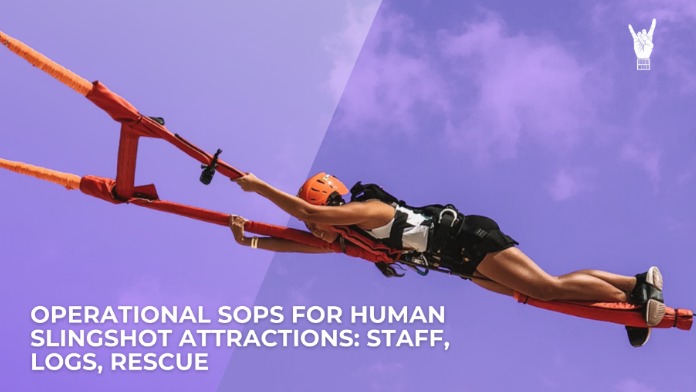
A human slingshot attraction does not fail in dramatic ways first. It fails quietly. A rushed harness check. A missed log entry. A new operator guessing instead of following a script. Then one day, a small mistake lined up with the wrong condition. That is why SOPs matter. Clear daily routines protect riders, protect staff, and keep the operation smooth even on busy days.
This guide covers three SOP pillars that make the biggest difference: staff roles, logs, and rescue readiness.
Staff roles and staffing levels for a human slingshot
When roles are unclear, checks get skipped. The safest operations assign ownership. One person checks. One person confirms. One person runs the launch.
A simple staffing structure that works
- Operator in charge runs the sequence and makes the final go or no go call
- Harness checker: fits and verifies all rider connections
- Spotter and zone controller keeps the launch area clear and manages the queue
- Technical lead on call: handles faults, wear findings, and sign offs
On high traffic days, do not reduce roles. Add support instead.
Pre-opening SOP for human slingshot in Dubai
Every day should start the same way. Consistency beats “experience” because experience varies by person and shift.
A strong pre-opening routine for human slingshot in Dubai
- Walk the site and confirm barriers, signage, and clear swing path
- Inspect harnesses for wear, stitching damage, and correct sizing options
- Check primary lines, backup lines, and all connectors for correct seating
- Run a controlled test cycle and listen for any new noise or friction
- Confirm emergency stop systems and communication signals
If anything feels different, stop and investigate. Do not chase throughput.
Rider briefing SOP: short, clear, repeatable
Briefings should be short and standardized. Riders are nervous. They will miss long instructions. Keep it direct.
A simple rider briefing checklist
- Confirm rider meets weight and health criteria
- Explain posture and hand placement before launch
- Confirm the rider understands the countdown and stop signals
- Repeat one key rule: do not touch hardware or straps during launch
- Verify final fit check before stepping into the launch position
Use the same script every time. It reduces errors and builds trust.
Rigging Services in Dubai: the daily check standard
SOPs should treat rigging checks like flight checks. Not optional. Not based on mood. Every day, the same sequence.
Daily check points aligned with Rigging Services in Dubai
- Pins fully seated with correct locking method in place
- No side loading on shackles or connectors
- No cable abrasion, kinks, or flattened sections
- Backup system routed independently, not sharing the same weak point
- Anchor points and structural joints show no movement or cracking
When the rigging check is consistent, operations become predictable.
Logs that protect safety and protect your operation
Logs are not paperwork. Logs are memories. They show what changed, when it changed, and who acted. Good logs also protect your team if questions come later.
What to record every day
- Opening inspection complete, with names and time
- Any wear found and what was replaced or monitored
- Test cycle notes if performance felt different
- Rider incidents, refusals, or abnormal behavior
- Closing inspection and any end of day concerns
If it is not written, it did not happen. That rule keeps standards high.
Rescue readiness: plan it before you need it
Rescue is not a document. It is a practice routine. Teams should know what to do if a rider is stuck, if the system fails to return, or if a medical issue occurs in mid cycle.
Rescue SOP essentials
- Define who leads rescue and who controls the crowd
- Keep rescue gear staged and easy to access
- Practice a rescue drill on a schedule, not “when we have time”
- Define stop rules and isolation steps before any rescue attempt
- Keep medical escalation steps clear and local contact details ready
This is where High Access Solutions in Dubai often support safe access to elevated points, controlled retrieval, and inspection after any incident.
Shift handover SOP: where mistakes often start
Many failures begin between shifts. A new team arrives and assumes everything is fine.
A clean shift handover includes
- Review the log and any open issues
- Confirm inspection status and time since last test cycle
- Verify inventory of harness sizes and backup components
- Repeat the stop rules and escalation contacts
Handover is a safety checkpoint, not a greeting.
Conclusion
A safe human slingshot operation is built on routine, not heroics. Clear staffing roles prevent skipped checks. Clean logs make issues traceable. Practiced rescue steps keep teams calm under pressure. When you support daily standards with Rigging Services in Dubai and plan access using High Access Solutions in Dubai, you reduce risk and keep the attraction running smoothly for riders and staff alike.