
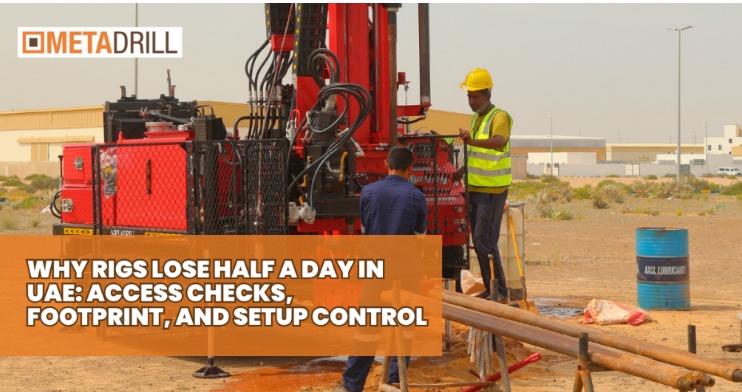
You can have a skilled crew and a solid plan and still lose half a day before the first meter is drilled. Not because anyone is slow, but because the rig cannot get in cleanly, cannot sit safely, or needs too many “small fixes” once it arrives. That is the real mobility math on busy UAE sites. When access is tight and time windows are short, choosing a compact drill rig is often the difference between a smooth setup and an expensive stop start day.
Access checks first: can the Geotechnical drilling rig reach the point
Most delays have happened in the last few meters, not on the highway. The Geotechnical drilling rig may reach the site gate, then you discover the final approach is blocked by kerbs, bollards, ramps, soft pavers, or overhead restrictions.
Before dispatch, confirm these access checks
- Measure the narrowest pinch point, not just the main gate
- Confirm turning space for the rig and support vehicle
- Check overhead clearance for canopies, signage, cables, and lighting
- Identify soft ground areas that need mats or protection
- Plan where spoil, water, and samples will be staged
If you do this early, you prevent the most common urban problem: arriving and then rearranging the entire site.
Footprint math: why a compact drill rig reduces setup friction
Footprint is not only about where the rig sits. It includes a safe working space, rod handling room, circulation for support gear, and a clear exclusion zone. A smaller rig footprint often means fewer conflicts with site traffic, pedestrians, and nearby structures.
Where a compact drill rig helps most
- Narrow plots with limited laydown area
- Projects with active vehicle movement and deliveries
- Sites with sensitive finishes like pavers and ramps
- Work zones close to buildings, fences, or boundary walls
In these conditions, smaller, stable rigs reduce repositioning and help crews start drilling sooner.
Setup time math: drill rig for small spaces needs fewer adjustments
Setup time is made of small steps: leveling, stabilizing, staging tools, setting barriers, and confirming safe clearances. The more complex the site, the more each step can drag. A drill rig for small spaces usually shortens setup because it requires less clearing and less rework.
A practical setup sequence that saves time
- Mark the drilling point and confirm final approach route
- Place mats or protection where needed before the rig moves in
- Level the rig once, then lock in stabilization
- Set the exclusion zone and keep walkways clear
- Stage rods, water, and sample boxes within easy reach
This keeps the crew focused on drilling, not on moving equipment around all day.
Why modern efficient geotechnical rigs win in UAE site conditions
Mobility is not the only size. It is how smoothly the rig performs once positioned. Modern efficient geotechnical rigs often provide better control, cleaner handling, and more stable performance, which reduces downtime caused by repeated adjustments.
What to look for in modern rigs for fast setup
- Stable leveling and controlled movement on uneven ground
- Consistent performance without overloading the site surface
- Easier access to service points for quick checks
- Safer, cleaner rod handling that reduces manual strain
These features do not just improve comfort. They reduce time waste and help maintain consistent output on tight schedules.
The mobility checklist you can use before every mobilization
Use this quick checklist to protect time and avoid surprises
- Access route confirmed end to end, including the last 10 meters
- Gate width, turning space, and overhead clearance verified
- Ground protection plan prepared for soft surfaces and ramps
- Footprint and exclusion zone mapped so the rig can work safely
- Staging plan set for spoil, water, and samples
If the checklist is clear, the day runs smoother. If it is skipped, small issues will pile up fast.
Conclusion
Rig mobility in the UAE is not guesswork. It is simple math: access plus footprint plus setup time. When you choose a compact drill rig and plan your setup around a drill rig for small spaces, you cut avoidable delays and start drilling on schedule. That is setup control in real terms: fewer surprises, fewer resets, and smoother mobilizations.