
Introduction
The prototype designing community has commonly encountered challenges of protracted production times, cost escalation, and lack of consistency with regards to quality, factors that cumulatively slow down the pace of prototype realization for novel designs. Traditional prototype designing and manufacturing largely dependent on manual processing lack standardization and therefore result in inefficiency and substantial wastage of resources. Being deeply dependent on unstandardized processes, this is a significant bottleneck.
This article shall make it clear how precision CNC machining has technological superiority with respect to prototype designing through automation and optimized processing for fast, affordable, and reliable prototype development.The subsequent discussion shall offer a comprehensive assessment of major approaches for overcoming these bottlenecks.
What is Precision CNC Machining and Its Core Role in the Prototype Design Community?
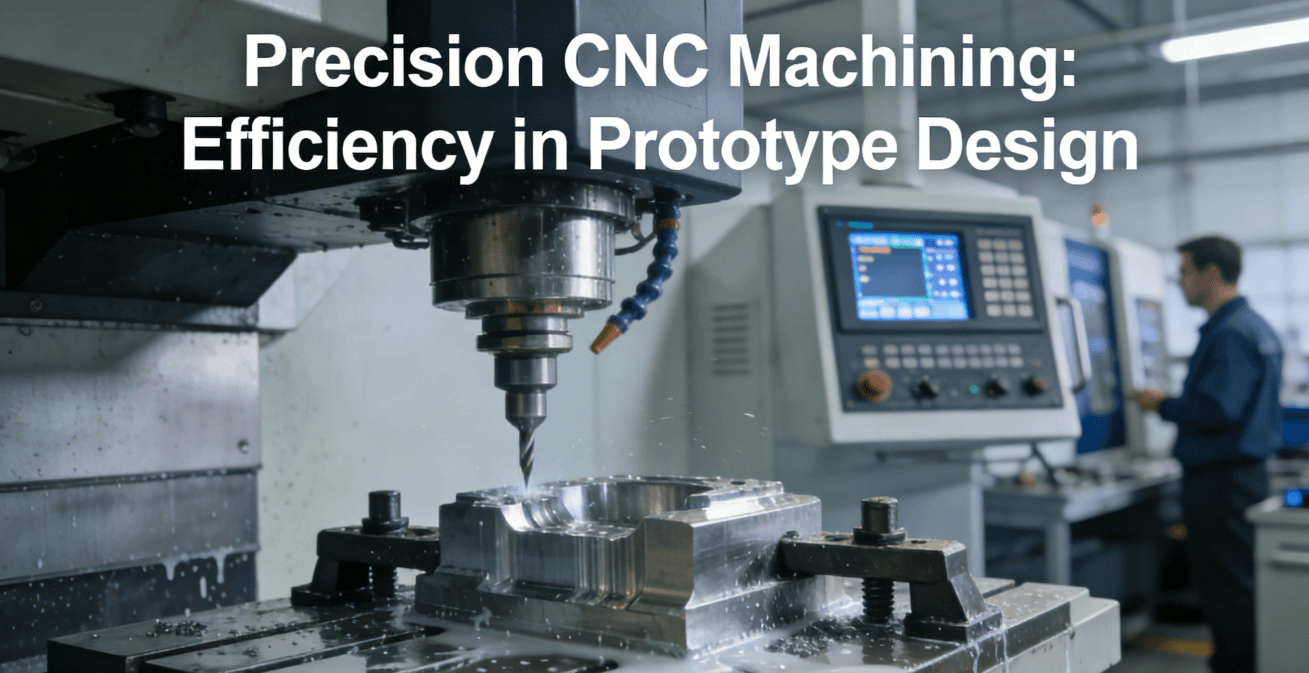
Precision CNC is a subtractive manufacturing process in which pre-programmed computer software directs the actions of factory tools and machinery. Material is removed from a solid block by the cutting tool to produce a part that has high dimensional accuracy. This technology is at the heart of the Prototype Design Community since it will turn a digital design into a physical, high-fidelity prototype with great precision and repeatability. This capability is critical when functional testing, form verification, and stakeholder approval is required.
The importance of standardization in mitigating errors cannot be overemphasized. The adherence to some high, internationally recognized quality management system contributes to consistency; for example, the International Organization for Standardization ISO 9001 standard for quality management systems includes guidelines, the implementation of which brings about substantive reduction of deviations, ensuring each prototype meets stringent specifications. Such standardization is critical in gaining the trust and cooperation of the community because they will share designs with the assurance that they will be produced correctly. All such standards integrated into Precision CNC Machining Services boost reliability and facilitate knowledge sharing and a culture of collaborative improvement.
How to Optimize the Rapid Prototyping Sharing Process with CNC Machining Tools?
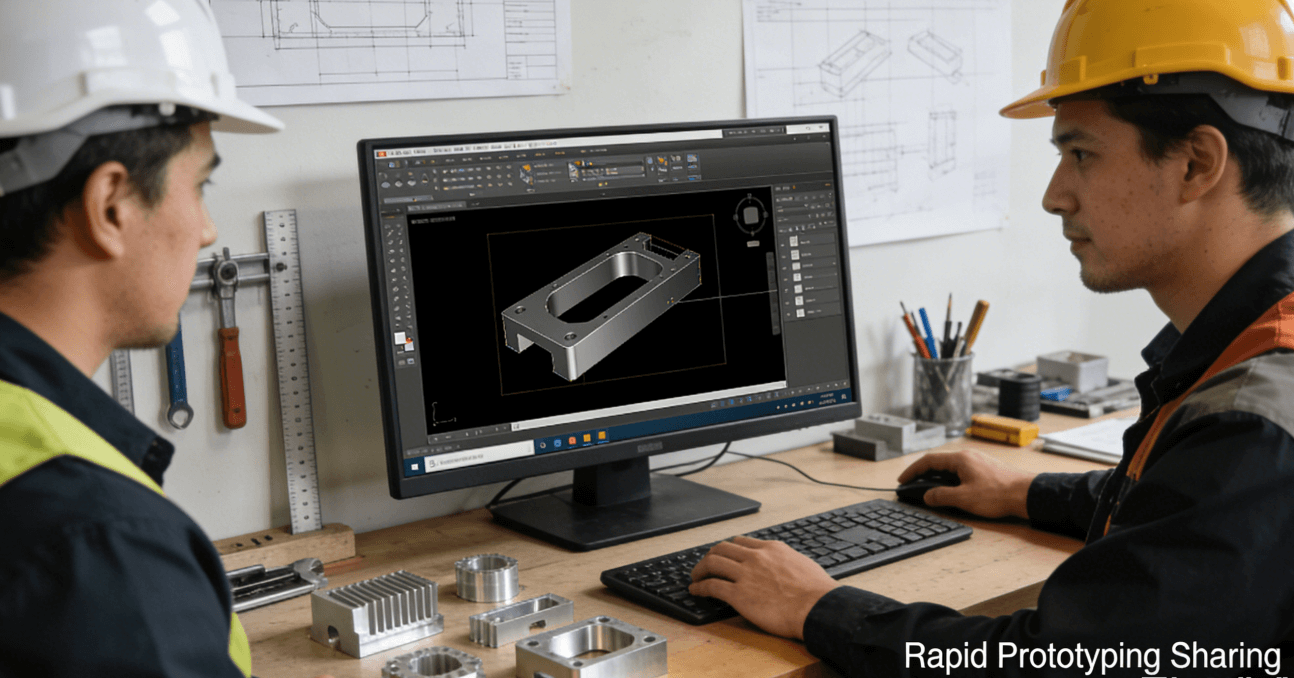
The flexibility in the Rapid Prototyping Sharing ecosystem can be greatly augmented using advanced CNC machining tools. These tools make the iterative design fast, enabling the designers to easily check and enhance their ideas.
The Effect of State-of-the-Art Multi-Axis
Today’s multi-axis CNC machines, also known as 5-axis CNC machines, have the ability to create complex geometries in a single operation, which results in minimal manual processing required in secondary operations. This further enhances the speed of iteration and enables the designer to test a new version of the prototype much faster than before.
Tool Choice & Cost-Effectiveness
Machining tools also influence project costs. Choosing suitable machining tools for different materials and designs helps achieve optimal speeds and prevents waste generation. Studies and literature from reputable sources, such as the American Society of Mechanical Engineers (ASME), on efficient manufacturing practices emphasize machining tools as one of the most essential factors for minimizing production costs and time. Using a variety of machining tools, as described in available sources for different precision CNC machining services, is essential for this objective.
Automation and Community Content Sharing
The automation that is embedded in CNC technology is more than just fast-paced production; it enables the sharing of industrial content.
- Digital Thread Integration
From the CAD file to the completed part, the complete digital process is a guarantee that the design intent is captured perfectly. This is especially good since the digital thread makes it easy to share the manufacturing data.
- Standardized Output for Cooperation
Because automated high precision CNC machining delivers predictable outcomes, this helps members of the community work together on various aspects of a development project in a clear manner. This predictability translates quality data from manufacturing to a shared asset.
How Does High Precision CNC Machining Reduce Total Cost in Prototype Development?
One myth is that high precision CNC machining is always costly. In fact, a cost analysis study shows considerable savings in prototype development. These major cost factors include scrap materials, man hours, and cost of delays.
High precision CNC technology provides a direct solution for these challenges. The ability to offer repeat accuracy as precise as ±0.005mm on the first machine pass helps reduce costs for rework. Additionally, minimizing waste factors with optimized tool path and nesting software helps keep costs down. The automation system also helps cut direct labor costs per unit. Moreover, industry certifications, such as ‘ISO 14001’ for environmental management system, make way for more sustainable and environmentally friendly practices in manufacturing as a long-term source for economic gain. For the Prototype Design Community, this helps ensure that custom CNC machining services become a necessity and not a privilege known as a smart and frugal solution for prototype units and small production runs, allowing projects to remain on budget without sacrificing quality and is an essential component of Industrial Content for a team that is able to maintain fiscal prudence.
How Do Custom CNC Machining Services Adapt to the Diverse Needs of the Industrial Content Community?
Industrial Content is a community that has extremely diverse project requirements, ranging from simple mechanical parts to complex assemblies involving more than one material. Custom CNC machining services have a unique advantage in meeting this diversity.
Design Complexity with Flexibility
While in standard processes, custom CNC services encompass intricate designs and varying materials. This enables residents to test the limits in terms of design without any constraints pertaining to manufacturing.
Enabling Rapid Iteration Cycles
These are designed for speed and agility. They can move rapidly from one task to another. This is because they are optimal for rapid iteration cycles in today’s world of product development. A designer can upload a modified CAD file and have a new prototype in days.
The Role of the CNC Machining Manufacturer
A proficient CNC machining manufacturer acts as a vital partner by integrating resources and expertise to serve community needs.
- Integration of Resources
A powerful manufacturer means access to an extended portfolio of materials and finishing options-an actual one-stop place.
- Technical Partnership
Beyond simple manufacturing, they will have much-valued Design for Manufacturability feedback that can help in optimizing design for cost, performance, and manufacturing. The partnership developed is what will lead to success. In such a case, exploring the capabilities of a qualified custom CNC machining services provider becomes the most crucial step.
What Key Factors Should Be Considered When Evaluating a CNC Machining Manufacturer?
Choosing the proper manufacturing partner is essential to the success of any prototyping. When considering the CNC machine manufacturer to work with, several major considerations should be properly examined.
The most important criterion is the technology capabilities, such as the types of equipment they use (e.g. 3-axis, 5-axis, mill turn machining centers), and the suitability of the equipment in delivering high precision CNC machining. Certified companies give an assurance of their company’s adherence to quality. Apart from the standard ISO 9001 certifications, industry-specific certifications such as IATF 16949 (automotive industry), AS9100D (aerospace industry), show the company has effective quality management system for undertaking high-profile projects. This showcases their adherence to the standard industrial requirements. The customer support offered is the last, but most effective, differentiator. Those companies that give the entire support from the Rapid Prototyping Sharing process will make the entire process more predictable.
Conclusion
To sum up, precision CNC machining is efficient in solving the essential problems faced in the prototype design community. By incorporating such cutting-edge technology, innovation cycles will certainly be accelerated.
Investigate the possibilities that these services have to offer in your next project. Upload your design files to a reliable service provider to get an instant quote and start a more efficient prototyping process.
Author Biography
The piece was written by an expert in precision manufacturing, with the concentration being on industrial innovation and sustainability, and research on the matter is based on global best practices and international standards of the sector.
FAQs
Q: Can precision CNC machining be applied to prototypes in low volume?
A: Yes, it is very efficient when it comes to small production order quantities. There is no setup involved, making it a very efficient process.
Q: On which factors does the cost efficiency of CNC machining depend?
A: Efficiency can be measured by examining material use, machine time, and tool life. Choosing the supplier with optimized processing can decrease overall costs by over 20%.
Q: Is it possible for high-precision CNC machining processes to deal with complex
A: Yes, definitely. Multi-axis machines have the precision of microns, and they have the ability to create the complex shapes demanded in industries like aeronautical and medical industries.
Q: How do custom services address the need for rapid prototyping sharing?
A: They make use of digital tools to process orders instantly, share files, and provide instant feedback, which greatly reduces the delivery time cycle.
Q: Why do international certifications like AS9100D matter for CNC machining?
A: Such certification ensures a deep quality and safety standard that diminishes certain risks, especially in rather regulated industries.