
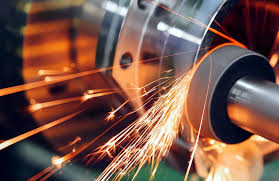
Selecting the right metalworking equipment for your business’s manufacturing operations can help drive efficiency and achieve precision. Reliable machinery, such as CNC milling machines tailored to your fabrication goals, minimizes downtime and provides a competitive edge in a demanding market. Here are a few tips for choosing the right metalworking equipment for your business’s needs:
Precision and Structural Rigidity
Precision and structural rigidity enable metalworking equipment to deliver accurate cutting, shaping, and drilling without losing stability from operational forces. A rigid, precise CNC mill minimizes deflection and maintains blueprint tolerances within microns, helping avoid errors and reduce scrap. Rigidity helps dampen vibrations, preventing chatter marks on workpieces. Cutting tools with structural integrity may last longer, as they absorb operational forces effectively, which slows wear and tear.
Verify your machinery features heavy, well-engineered box-type frames to minimize flex, and check that it includes cast iron or reinforced steel bases to effectively dampen vibrations. You are also able to request manufacturer data on positioning accuracy. The data should be verified through Coordinate Measuring Machine (CMM) testing or laser interferometry. A CMM is a high-precision contact device, while laser interferometry offers ultra-precise, non-contact measurement of machinery. These options gauge equipment precision through performance verification, high-accuracy calibration checks, and detailed error mapping.
Production Capacity and Efficiency
Machinery with the necessary production capacity directly influences your business’s efficiency and long-term competitiveness. A CNC milling machine capable of handling high volumes efficiently reduces delays, enabling you to meet delivery timelines. Make sure that the equipment has adequate spindle speed to prevent potential failures during high-volume operations.
Machinery with higher production capacity also helps cut down on overheads. Larger throat depths on equipment like radial drills promote faster processing of more and larger workpieces, and this minimizes energy and labor per part. Machines that meet your business’s core production requirements help maintain consistency and accuracy, leading to high-quality workpieces and minimal waste. Choosing radial drills, punches, and CNC fabrication tools capable of high-volume production also supports your business in scaling efficiently. You won’t need to replace them prematurely.
Assessing the specifications and capacity of your intended machinery helps determine if it can meet your business’s production needs. Check for specifications such as speed ratings, work envelope, and power. For CNC milling machines, evaluate axis travel and table size; for radial drills, verify spindle capacity and arm reach. Prioritize metalworking equipment with automation for efficient repeatability in high-volume operations. Review reliability metrics such as Mean Time Between Failures (MTBF). Analyzing this metric helps you determine how long the machinery can operate between tasks and assess its likelihood of unplanned breakdowns.
Workflow Integration and Versatility
CNC milling machines, lathes, or radial drills that integrate with existing operators and software enhance productivity by minimizing bottlenecks. Seamless integration with Computer-Aided Design (CAD) or Computer-Aided Manufacturing (CAM) allows data to flow from these systems to metalworking machinery, and this eliminates time-consuming manual conversions. Integration with CAD, CAM, and Enterprise Resource Planning (ERP) systems enables accurate, real-time monitoring of operations. This helps eliminate errors from human input. Versatility complements workflow integration by allowing one metalworking machine to handle multiple tasks, such as milling complex contours and drilling precise holes in tough alloys.
Automation and Control Capabilities
Metalworking machines with automation eliminate human error by delivering milling, drilling, or cutting that meets exact specifications. Automation makes sure that complex machined parts maintain consistent dimensions across repeated production. Industries like aerospace and automotive should prioritize automation and control for precise, reliable results. Machinery with control systems adjusts in real-time to issues like tool wear, breakage, or variations in spindle load. Features such as software feedback loops and sensors in the control systems enhance real-time adjustments.
Material Compatibility and Fabrication Complexity
Using materials compatible with your machinery provides smooth operation and reduces the need for frequent jams or recalibrations during complex fabrication processes. This prevents workflow disruptions and also helps businesses save hours every day. Compatible materials help maintain the equipment’s stability and rigidity. This prevents potential defects that may lead to machine damage or safety risks for operators.
Purchase Quality Metalworking Equipment Today
Being clear on your precision expectations and the business’s fabrication processes guides you in selecting the right metalworking equipment. The right machinery helps provide operational reliability due to enhanced technical performance. Contact a reliable machinery dealer for advanced equipment.