
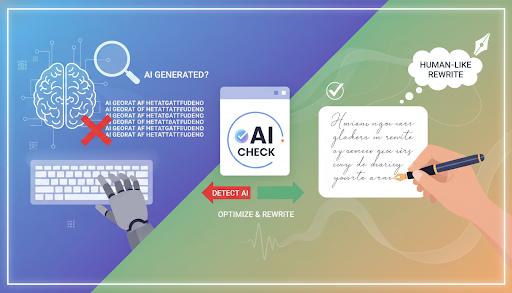
Writing with AI rarely feels risky at first. The draft appears fast, reads smoothly, and hits the required length. Doubt usually arrives later, when the text needs to be submitted, published, or reviewed by someone else. Dechecker is built for that exact pause. It helps writers slow down at the right moment, assess whether a text feels overly artificial, and make focused adjustments before the content faces real scrutiny.
The Moment Writers Start Questioning Their Draft
When fluency feels suspicious
Many writers notice the problem instinctively. The sentences are clear, but too evenly clear. The tone never wavers. Nothing sounds wrong, yet nothing sounds personal either. This is often when people turn to an AI Checker to confirm whether that uneasy feeling has a technical basis.
Experience teaches caution
Writers who have had content flagged, rejected, or quietly downgraded learn quickly that surface quality is not the whole story. Dechecker fits into workflows shaped by that experience. It answers the question seasoned writers ask themselves: “Would this pass if someone looked closely?”
Trust shifts from tools to judgment
The goal is not to prove authorship, but to regain control. Dechecker supports judgment instead of replacing it, giving writers evidence before they decide what to change.
How Dechecker Fits Into Real Writing Workflows
Drafting without interruption
Most effective users don’t open Dechecker during writing. They draft freely, using AI where it helps speed or structure. The review happens after ideas are fully on the page, when clarity matters more than momentum.
Reviewing with purpose
Running a text through the AI Checker highlights where patterns concentrate. Writers can see which sections matter and which can be ignored. This avoids unnecessary rewriting and keeps the original intent intact.
Editing in short passes
Instead of rewriting entire documents, users often fix two or three paragraphs. Dechecker makes those decisions faster by narrowing attention to what actually triggers detection signals.
What the AI Checker Commonly Surfaces
Predictable sentence rhythm
AI tends to favor balance and consistency. Over time, that rhythm becomes noticeable. Dechecker identifies where sentences march at the same pace and encourages subtle variation that restores natural flow.
Vague confidence
AI-generated text often sounds confident without taking a clear stance. Phrases feel safe, not decisive. The AI Checker shows where sharpening a claim improves credibility without changing meaning.
Transitional filler
Introductions and conclusions are common weak points. Dechecker helps writers spot generic transitions that feel assembled rather than chosen.
Moving From Detection to Revision
Editing with context
Seeing why a paragraph is flagged matters more than seeing that it is flagged. Dechecker provides context, allowing writers to adjust tone, specificity, or structure with intention.
Keeping the original voice
The aim is not to erase AI assistance entirely. It is to make sure the final voice reflects human priorities. Dechecker supports refinement without flattening personality.
Knowing when to stop revising
Over-editing often introduces new problems. Writers learn to recognize when AI signals drop enough and the text feels stable again. Dechecker helps define that stopping point.
Humanizing Without Overwriting
Precision still matters
Professional writing needs clarity. Excessive humanization can blur meaning. Dechecker supports targeted changes that preserve technical accuracy.
Strategic use of rewriting tools
In sections that resist manual edits, the AI Humanizer offers a controlled rewrite. Writers often use it selectively, comparing outputs rather than accepting changes blindly.
Avoiding tone drift
Humanizing does not mean informal. Dechecker helps writers maintain appropriate tone for academic, marketing, or professional contexts.
Academic Writing Under Scrutiny
Anxiety shapes behavior
Students often worry more about detection than about learning. Dechecker reframes the process by showing exactly what triggers AI suspicion and what does not.
Skill-building through feedback
By revising flagged sections and watching AI Checker scores change, students begin to understand how sentence variety, specificity, and argument structure affect perception.
Supporting honest work
Dechecker does not assume misuse. It helps students improve drafts responsibly, especially when AI tools were used for outlining or brainstorming.
Content Creation and Publishing Pressure
Speed changes expectations
AI makes content production faster, but readers still expect originality. Dechecker helps creators identify where speed has compromised distinction.
Engagement depends on tone
Search performance increasingly reflects user behavior. Content that feels intentional holds attention longer. AI Checker insights indirectly support better engagement by improving perceived authenticity.
Scaling without sameness
Teams producing large volumes of content use Dechecker to ensure drafts don’t start sounding interchangeable. It becomes part of quality control, not an obstacle.
Professional and Business Documents
Language signals responsibility
In proposals and reports, wording reflects accountability. AI-generated neutrality can weaken authority. Dechecker highlights where firmer language clarifies ownership and intent.
Faster internal reviews
Teams referencing AI Checker results resolve debates more quickly. Instead of subjective opinions about tone, they point to specific sections that need adjustment.
Demonstrating care in AI use
Running documents through Dechecker before delivery shows that AI assistance was managed thoughtfully. This matters in regulated or high-stakes environments.
Building Long-Term Writing Intuition
Repetition sharpens instinct
Over time, writers anticipate AI Checker feedback. They adjust drafts naturally, reducing reliance on tools while maintaining quality.
From reaction to foresight
Dechecker shifts writing from reactive editing to proactive decision-making. Writers begin to shape sentences with readers in mind, not detectors.
Keeping focus on outcomes
Ultimately, Dechecker supports results. Approval, trust, engagement, and clarity matter more than scores. The tool helps writers align AI-assisted drafts with those outcomes.
Writing That Holds Up Beyond the Draft
AI will continue to evolve, and detection methods will change with it. What remains constant is how humans react to language. Dechecker operates at that human layer, helping writers decide when a piece of text feels intentional, credible, and ready for others.
By using AI Checker insights to guide selective revision and applying humanization only where it adds value, Dechecker fits naturally into real writing workflows. It does not slow writers down. It helps them pause at the right moment, make informed adjustments, and move forward with confidence.